Datawhale干货
作者:王大鹏,Datawhale成员
大家好,我是大鹏,周末看到朋友转发的⼀篇文章:《那些年,为了进阿里背过的面试题》。
本文作者公众号
感叹失败的原因可能有很多,而做成的道路只有⼀条,那就是不断积累。纯手工的8291字的SQL面试题总结分享给初学者,俗称八股文,期待对新手有所帮助。
(Datawhale公众号后台回复:SQL面试题 可获取完整PDF资料)
窗口函数题
窗口函数其实就是根据当前数据, 计算其在所在的组中的统计数据。
窗口函数和group by得区别就是,groupby的聚合对每一个组只有一个结果,但是窗口函数可以对每一条数据都有一个结果。
商品类别数据集
一. 从数据集中得到每个类别收入第一的商品和收入第二的商品。
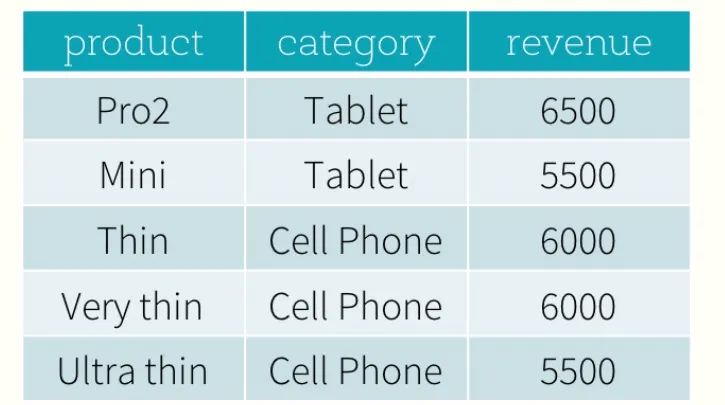
思路:计算每一个类别的按照收入排序的序号,然后取每个类别中的前两个数据。
总结答案:
SELECT
  product,
  category,
  revenue
FROM (
  SELECT
    product,
    category,
    revenue,
    dense_rank() OVER w as 'rank'
  FROM productRevenue
WINDOW w as (PARTITION BY category ORDER BY revenue DESC)
) tmp
WHERE
  'rank' <= 2;
- 按照类别进行分组,且每个类别中的数据按照收入进行排序,并为排序过的数据增加编号:
SELECT product,
 category,
 revenue,
 dense_rank() OVER w as 'rank'
FROM productRevenue
WINDOW w as (PARTITION BY category ORDER BY revenue DESC);
- 根据编号,取得每个类别中的前两个数据作为最终结果;
二. 统计每个商品和此品类最贵商品之间的差值
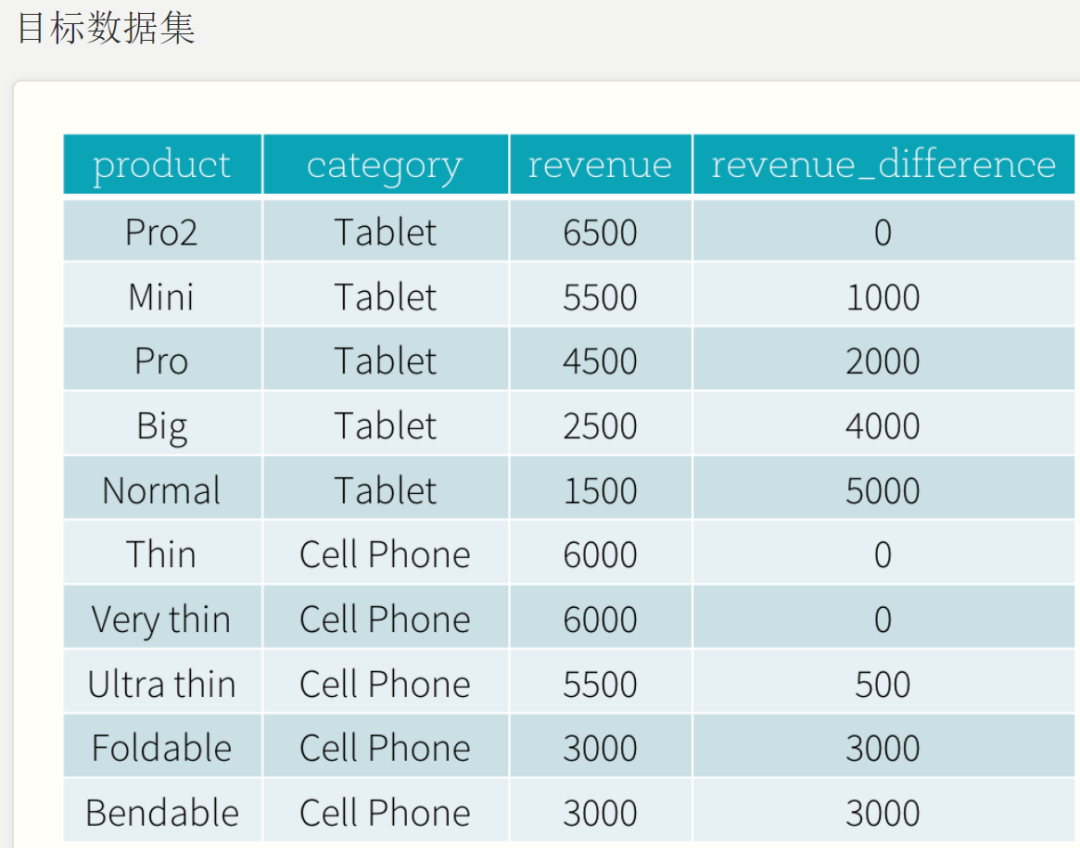
总结答案:
SELECT
    product,
    category,
    revenue,
    MAX(revenue) OVER  w - revenue as revenue_difference
FROM productRevenue
WINDOW w as (PARTITION BY category ORDER BY revenue DESC);
- 首先创建窗口,按照类别进行分组,并对价格倒叙排列;
- 应用窗口,求出每个组内的价格最大值,对其减去商品的价格,起别名。
用户表(时长,用户id)
查询某一天中时长最高的60% 用户的平均时长
总结答案:
with aa as(
  select
    *,
    row_number() over(
      order by
        时长 desc
    ) as rank_duration
  from
    表
  where
    package_name = 'com.miHoYo.cloudgames.ys'
    and date = 20210818
)
select
  avg(时长)
from
  aa
where
  rank_duration <= (
    select
      max(rank_duration)
    from
      aa
  ) * 0.6;
这是排名问题,排名问题可以考虑用窗口函数去解决。
将问题拆分为:
1) 找出时长前60%的用户;
2) 剔除访问次数前20%的用户
首先找某天的数据,按时长降序从高到低进行排名,注意要用row_number,相相等的话也会往后算数:
select
    *,
    row_number() over(
      order by duration desc
    ) as rank_duration
  from
    表
where
    package_name = 'com.miHoYo.cloudgames.ys'
    and date = 20210818;
排完名后,要找出前60%的用户:
**用户排名值<=最大的排名值 * 60%**,就是前60%的用户数据。
最大的排名值通过max(排名)来得到。
把排名结果表作为临时表,但是要注意的是,临时表只能用其中的字段,但是不能当作表来用。所以需要用with as语句将排名作为临时表。
用户签到表
有一张用户签到表【t_user_attendence】,标记每天用户是否签到(说明:该表包含所有用户所有工作日的出勤记录) ,包含三个字段:日期【fdate】,用户 id【fuser_id】,用户当天是否签到【fis_sign_in:0 否 1 是】
计算截至当前每个用户已经连续签到的天数
计算最近一次未签到的日期,再用当前日期减去那个日期
select
  fuser_id,
  datediff(CURDATE(), fdate_max) as fcon,
  secutive_days
from
  (
    select
      fuser_id,
      max(fdate) as fdate_max
    from
      t_user_attendence
    where
      fis_sign_in = 0
    group by
      fuser_id
  ) t1;
请计算每个用户历史以来最大的连续签到天数
思路1:把相同数值进行分组再自然连续排序,两个排序相减得到差值 t,若数值连续,则差值 t 相等。
先按人分组按天进行自然连续排序,再只取签到部分,按人分组进行自然连续排序,相差得到差值 diff1;再按照差值 diff1 分组计数,得到每人连续签到的天数,求最大值即可。
SELECT
  fuser_id,
  max(ct) as max_ct
FROM
  (
    SELECT
      fuser_id,
      diff1,
      count(diff1) as ct
    FROM
      (
        SELECT
          *,
          row_number() over (
            PARTITION by fuser_id
            ORDER BY
              fdate
          ) as or2,
          or1 - row_number() over (
            PARTITION by fuser_id
            ORDER BY
              fdate
          ) as diff1
        FROM
          (
            SELECT
              fdate,
              fuser_id,
              fis_sign_in,
              row_number() over (
                partition by fuser_id
                order by
                  fdate
              ) as or1
            from
              t_user_attendence
            order by
              fuser_id,
              fdate
          ) t
        where
          fis_sign_in = 1
      ) t2
    GROUP BY
      fuser_id,
      diff1
  ) t3
GROUP BY
  fuser_id;
思路2:把相同数值进行分组再自然连续排序,两个排序相减得到差值 t,若数值连续,则差值 t 相等。
SELECT
  log_id, log_date
  max(ct) as max_ct
FROM
  (
    SELECT
      log_id,
      diff1,
      count(diff1) as ct
      log_date
    FROM
      (
        SELECT
          *,
          row_number() over (
            PARTITION by log_id
            ORDER BY
              log_date
          ) as or2,
          or1 - row_number() over (
            PARTITION by log_id
            ORDER BY
              log_date
          ) as diff1
        FROM
          (
            SELECT
              log_id,
              log_date,
              row_number() over (
                partition by log_id
                order by
                  log_date
              ) as or1
            from
              log_info
            order by
              log_id,
              log_date
          ) t
      ) t2
    GROUP BY
      log_id,
      diff1,
      log_date
  ) t3
GROUP BY
  fuser_id, log_date;
用户行为信息表
给你一个表,表中有两列数据:date和user_id,计算次日留存用户数
- 基础版本
**答案–**产出结果:第一列为时间,第二列为次日留存用户数;(简单实现)
SELECT  b_time_load, COUNT(DISTINCT case when diff=1 then id else null end)as liucun_num
FROM
(
    SELECT *, TIMESTAMPDIFF(DAY,a_time_load, b_time_load) as diff
    FROM
    (
        SELECT a.id, a.time_load as a_time_load,b.time_load as b_time_load
        FROM user_move as a
        LEFT JOIN user_move as b
        on a.id = b.id
    )as c
)as d
GROUP BY b_time_load;
实现思路:
次日留存用户数:在今日登录,明天也有登录的用户数。也就是时间间隔 = 1。
当一个表如果涉及到时间间隔,就需要用到自联结,也就是将相同的表进行联结。
第一步:因为要算时间间隔,因此需要先对表进行自联结:
select a.用户id,a.登陆时间,b.登陆时间
from 用户行为信息表 as a
left join 用户行为信息表 as b
on a.用户id = b.用户id
where a.应用名称= '相机';
// 根据条件看是否要加最后一句where。
第二步:计算两个日期的差值--
select *,timestampdiff(day,a.登陆时间,b.登陆时间) as 时间间隔
from c;
第三步:用case选出时间间隔为1的数据:
count(distinct case when 时间间隔=1 then 用户id else null end) as  次日留存数
- 优化点
- 考虑表的日期分区
- 考虑对用户的去重,比如一天内登录多次的情况
- 考虑count distinct的效率,在前面就对diff = 1当作条件过滤,而不选择加在case when里做处理;
同上,求次日留存率
留存率 = 新增用户****中登录用户数 / 新增用户数,所以次日留存率 = 次日留存用户数 / 当日用户活跃数;
当日活跃用户数是 count(distinct 用户 id),用次日留存用户数 / 当日用户活跃数就是次日留存率:
SELECT  b_time_load, COUNT(DISTINCT case when diff=1 then id else null end) as liucun_num, COUNT(DISTINCT case when diff=1 then id else null end)/ count(distinct id) as liucun_rate
FROM
(
    SELECT *, TIMESTAMPDIFF(DAY,a_time_load, b_time_load) as diff
    FROM
    (
        SELECT a.id, a.time_load as a_time_load,b.time_load as b_time_load
        FROM user_move as a
        LEFT JOIN user_move as b
        on a.id = b.id
    )as c
)as d
GROUP BY b_time_load
每天的活跃用户数
select 登陆时间,count(distinct 用户id) as 活跃用户数
from 用户行为信息表
where 应用名称 ='相机'
group by 登陆时间;
三日的留存数,三日留存率, 七日的留存数, 七日留存率
将diff后的数字改为3/7即可。
SELECT  b_time_load, COUNT(DISTINCT case when diff=3 then id else null end) as liucun_num, COUNT(DISTINCT case when diff=3 then id else null end)/ count(distinct id) as liucun_rate
FROM
(
    SELECT *, TIMESTAMPDIFF(DAY,a_time_load, b_time_load) as diff
    FROM
    (
        SELECT a.id, a.time_load as a_time_load,b.time_load as b_time_load
        FROM user_move as a
        LEFT JOIN user_move as b
        on a.id = b.id
    )as c
)as d
GROUP BY b_time_load
给定两张表订单表和用户表:查询2019年Q1季度,不同性别,不同年龄的成交用户数,成交量及成交金额
根据性别、年龄进行分组,利用多表连接及聚合函数求出成交用户数,成交量及成交金额。
select b.性别,b.age,
   count(distinct a.用户id) as 用户数,
   count(订单id),
   sum(a.订单金额)
from 订单表 as a
inner join 用户表 as b
on a.用户id = b.用户id
where a.时间 between '2019-01-01' and '2019-03-31'
group by b.性别,b.age;
给定两张表:订单表和用户表,2019年1-4月产生订单的用户,以及在次月的留存用户数
select a.用户id,
COUNT(case when TIMESTAMPDIFF(month,a.时间, b.时间)=1 then a.用户id else null end) as liucun_num
from 订单表 as a join 订单表 as b
on a.用户id = b.用户id
where a.时间 between '2019-01-01' and '2019-04-30'
group by a.用户id
给定一个表,表里两个字段:user_id, date_key,找出来今日登录(2021-05-16)且一周内没有登录的用户id:
第一步,先把date_key字段类型处理成日期形式;
第二步,查找最近一周的用户登录;
第三步,查找今日登录的用户id,不在最近一周登录的id里的
select distinct user_id, date_format(date_key, '%Y-%m-%d') as login_date
from 用户行为信息表
where  date_format(date_key, '%Y-%m-%d') ='2021-05-16'
and user_id not in
(select distinct user_id
from 用户行为信息表
WHERE DATEDIFF('2021-05-16',date_key)<=7 and DATEDIFF('2021-05-16',date_key)>0 )
order by user_id;
员工表
有3个表dept(部门表),emp(员工表),salgrade(薪水等级表):
dept(DEPTNO,DNAME,LOC)代表(部门编号,部门名称,位置)
emp(EMPNO,ENAME,JOB,MGR,HIREDATE,SAL,COMM,DEPTNO)代表(员工编号,员工姓名,工作岗位,上级经理编号, 入职日期)
salgrade(GRADE,LOSAL,HISAL)代表(薪水级别,最低薪水,最高薪水)
取得每个部门最高薪水的人员名称
答案
select e.deptno, e.ename, t.maxsal, e.sal
from (
      select e.deptno, max(e.sal) as maxsal
      from emp e
      group by e.deptno
     ) t
join emp e
on t.deptno = e.deptno
where t.maxsal = e.sal
order by e.deptno;
第一步:求出每个部门的最高薪水:
select e.deptno, max(e.sal) as maxsal
from emp e
group by e.deptno;
+--------+---------+
| deptno | maxsal  |
+--------+---------+
|     10 | 5000.00 |
|     20 | 3000.00 |
|     30 | 2850.00 |
+--------+---------+
第二步:将以上查询结果当成一个临时表
select e.deptno, e.ename, t.maxsal, e.sal
from t
join emp e
on t.deptno = e.deptno
where t.maxsal = e.sal
order by e.deptno;
+--------+-------+---------+---------+
| deptno | ename | maxsal  | sal     |
+--------+-------+---------+---------+
|     10 | KING  | 5000.00 | 5000.00 |
|     20 | SCOTT | 3000.00 | 3000.00 |
|     20 | FORD  | 3000.00 | 3000.00 |
|     30 | BLAKE | 2850.00 | 2850.00 |
+--------+-------+---------+---------+
最后把t换下。
哪些人的薪水在部门平均薪水之上
答案
select t.detpno, e.ename
from (select e.deptno, avg(e.sal) as avgsal
      from emp e
      group by e.deptno) t
join emp e
on e.deptno = t.deptno
where e.sal > t.avgsal;
第一步:求出每个部门的平均薪水
select e.deptno, avg(e.sal) as avgsal
from emp e
group by e.deptno;
+--------+-------------+
| deptno | avgsal      |
+--------+-------------+
|     10 | 2916.666667 |
|     20 | 2175.000000 |
|     30 | 1566.666667 |
+--------+-------------+
第二步:需要保证员工在这个部门里,将以上查询结果当成临时表t(deptno, avgsal)
select t.detpno, e.ename
from t
join emp e
on e.deptno = t.deptno
where e.sal > t.avgsal;
第三步:把临时表t进行替换
select t.detpno, e.ename
from (select e.deptno, avg(e.sal) as avgsal
      from emp e
      group by e.deptno) t
join emp e
on e.deptno = t.deptno
where e.sal > t.avgsal;
+--------+-------+
| deptno | ename |
+--------+-------+
|     30 | ALLEN |
|     20 | JONES |
|     30 | BLAKE |
|     20 | SCOTT |
|     10 | KING  |
|     20 | FORD  |
+--------+-------+
取得部门中(所有人的)平均薪水等级
取得部门中所有人的平均薪水的等级
答案
select t.deptno, t.avgsal, s.grade
from (select e.deptno, avg(e.sal) as avgsal
      from emp e
      group by e.deptno) t
join salgrade s
on t.avgsal between s.losal and s.hisal;
第一步:求出每个部门的平均薪水
select e.deptno, avg(e.sal) as avgsal
from emp e
group by e.deptno;
+--------+-------------+
| deptno | avgsal      |
+--------+-------------+
|     10 | 2916.666667 |
|     20 | 2175.000000 |
|     30 | 1566.666667 |
+--------+-------------+
第二步:将以上表作为临时表t,根据平均薪水在等级表中进行比对
select t.deptno, t.avgsal, s.grade
from t
join salgrade s
on t.avgsal between s.losal and s.hisal;
第三步:把临时表t替换为子查询
select t.deptno, t.avgsal, s.grade
from (select e.deptno, avg(e.sal) as avgsal
      from emp e
      group by e.deptno) t
join salgrade s
on t.avgsal between s.losal and s.hisal;
+--------+-------------+-------+
| deptno | avgsal      | grade |
+--------+-------------+-------+
|     30 | 1566.666667 |     3 |
|     10 | 2916.666667 |     4 |
|     20 | 2175.000000 |     4 |
+--------+-------------+-------+
取得部门中所有人的平均的薪水等级
答案
select t.deptno, avg(t.grade) as avgGrade
from (
      select e.deptno, e.ename, s.grade
      from emp e
      join salgrade s
      on e.sal between s.losal and s.hisal
      order by e.deptno
     )
group by t.deptno;
第一步:求出每个人的薪水等级
select xxx
from emp e
join salgrade s
on e.sal between s.losal and s.hisal
order by e.deptno;
+--------+--------+-------+
| deptno | ename  | grade |
+--------+--------+-------+
|     10 | CLARK  |     4 |
|     10 | MILLER |     2 |
|     10 | KING   |     5 |
+--------+--------+-------+
xxx为:e.deptno, e.ename, s.grade
(求得是部门等级值得平均值)
第二步:求出每组薪水的平均值
select t.deptno, avg(t.grade) as avgGrade
from t
group by t.deptno;
+--------+----------+
| deptno | avgGrade |
+--------+----------+
|     10 |   3.6667 |
|     20 |   2.8000 |
|     30 |   2.5000 |
+--------+----------+
不用组函数,取得最高薪水(给出两种解决方案)
方案一:
select sal
from emp
order by sal desc limit 1;
方案二:两个表进行比较
select sal from emp
where sal not in(
  select distinct a.sal
  from emp a
  join emp b
  on a.sal < b.sal);
取得平均薪水最高的部门的部门编号
答案
select e.deptno, avg(e.sal) as avgsal
from emp e
group by e.deptno
having avgsal = (select max(t.avgsal) as maxAvgSal from
  (
    select e.deptno, avg(e.sal) as avgsal
    from emp e
    group by e.deptno
  )
);
第一步:求出部门平均薪水
select e.deptno, avg(e.sal) as avgsal
from emp e
group by e.deptno;
+--------+-------------+
| deptno | avgsal      |
+--------+-------------+
|     10 | 2916.666667 |
|     20 | 2175.000000 |
|     30 | 1566.666667 |
+--------+-------------+
第二步:将以上查询结果当作临时表t
select max(t.avgsal) as maxAvgSal from t;
+-------------+
| maxAvgSal   |
+-------------+
| 2916.666667 |
+-------------+
第三步:最大的平均值有了,用其做过滤
select e.deptno, avg(e.sal) as avgsal
from emp e
group by e.deptno
having avgsal = (select max(t.avgsal) as maxAvgSal from t);
+--------+-------------+
| deptno | avgsal      |
+--------+-------------+
|     10 | 2916.666667 |
+--------+-------------+
取得平均薪水最高的部门的部门名称
部门名称在dept表
select e.deptno, d.dname, avg(e.sal) as avgsal
from emp e
join dept d
on e.deptno = d.deptno
group by e.deptno, d.dname
having avgsal = (select max(t.avgsal) as maxAvgSal from t);
求平均薪水的等级最低的部门的部门名称
答案
select
    t.deptno,t.dname,s.grade
from
    (select
            e.deptno,d.dname,avg(e.sal) as avgsal
        from
            emp e
        join
            dept d
        on
            e.deptno = d.deptno
        group by
            e.deptno,d.dname)t
join
    salgrade s
on
    t.avgsal between s.losal and s.hisal
where
    s.grade = (select min(t.grade) as minGrade from (select
                    t.deptno,t.dname,s.grade
                from
                    (select
                            e.deptno,d.dname,avg(e.sal) as avgsal
                        from
                            emp e
                        join
                            dept d
                        on
                            e.deptno = d.deptno
                        group by
                            e.deptno,d.dname)t
                join
                    salgrade s
                on
                    t.avgsal between s.losal and s.hisal)t);
第一步:求出部门的平均薪水
select
    e.deptno,d.dname,avg(e.sal) as avgsal
from
    emp e
join
    dept d
on
    e.deptno = d.deptno
group by
    e.deptno,d.dname;
+--------+------------+-------------+
| deptno | dname      | avgsal      |
+--------+------------+-------------+
|     10 | ACCOUNTING | 2916.666667 |
|     20 | RESEARCH   | 2175.000000 |
|     30 | SALES      | 1566.666667 |
+--------+------------+-------------+
第二步:将以上查询结果当作临时表t,与salgrade表进行表连接
select
    t.deptno,t.dname,s.grade
from
    (select
            e.deptno,d.dname,avg(e.sal) as avgsal
        from
            emp e
        join
            dept d
        on
            e.deptno = d.deptno
        group by
            e.deptno,d.dname)t
join
    salgrade s
on
    t.avgsal between s.losal and s.hisal;
+--------+------------+-------+
| deptno | dname      | grade |
+--------+------------+-------+
|     30 | SALES      |     3 |
|     10 | ACCOUNTING |     4 |
|     20 | RESEARCH   |     4 |
+--------+------------+-------+
排序求是不对的,得先求出最低等级。
第三步:将以上查询结果当成一张临时表t
select min(t.grade) as minGrade from (select
                    t.deptno,t.dname,s.grade
                from
                    (select
                            e.deptno,d.dname,avg(e.sal) as avgsal
                        from
                            emp e
                        join
                            dept d
                        on
                            e.deptno = d.deptno
                        group by
                            e.deptno,d.dname)t
join
    salgrade s
on
    t.avgsal between s.losal and s.hisal)t;
+----------+
| minGrade |
+----------+
|        3 |
+----------+
第四步:最终
select
    t.deptno,t.dname,s.grade
from
    (select
            e.deptno,d.dname,avg(e.sal) as avgsal
        from
            emp e
        join
            dept d
        on
            e.deptno = d.deptno
        group by
            e.deptno,d.dname)t
join
    salgrade s
on
    t.avgsal between s.losal and s.hisal
where
    s.grade = (select min(t.grade) as minGrade from (select
                    t.deptno,t.dname,s.grade
                from
                    (select
                            e.deptno,d.dname,avg(e.sal) as avgsal
                        from
                            emp e
                        join
                            dept d
                        on
                            e.deptno = d.deptno
                        group by
                            e.deptno,d.dname)t
                join
                    salgrade s
                on
                    t.avgsal between s.losal and s.hisal)t);
+--------+-------+-------+
| deptno | dname | grade |
+--------+-------+-------+
|     30 | SALES |     3 |
+--------+-------+-------+
取得比普通员工(员工代码没有在mgr上出现的)的最高薪水还要高的经理人姓名
答案
select ename from emp
where sal > (
      select max(sal) as maxsal
      from emp
      where empno not in(
            select distinct mgr from emp
            where mgr is not null
            )
      );
第一步:找出普通员工(员工代码没有出现在mgr上的)
先找出mgr有哪些人
select distinct mgr from emp;
+------+
| mgr  |
+------+
| 7902 |
| 7698 |
| 7839 |
| 7566 |
| NULL |
| 7788 |
| 7782 |
+------+
第二步:求出普通员工得最高薪水
select max(sal) as maxsal from emp where empno not in(select distinct mgr from emp where mgr is not null);
+---------+
| maxsal  |
+---------+
| 1600.00 |
+---------+
not in不会自动忽略空值,in会自动忽略空值。一旦没有忽略空值,None就会参与数学运算,结果就变为了None。not in是and, in参数关系是or。
第三步:比普通员工最高薪水还要高的
select ename from emp where sal > (
    select max(sal) as maxsal from emp where empno not in(
        select distinct mgr from emp where mgr is not null
    )
);
+-------+
| ename |
+-------+
| JONES |
| BLAKE |
| CLARK |
| SCOTT |
| KING  |
| FORD  |
+-------+
取得薪水最高的前五名员工
select * from emp order by sal desc limit 0,5;
取得薪水最高的第六到第十名员工
select * from emp order by sal desc limit 5,5;
取得最后入职的5名员工
select * from emp order by hiredate desc limit 5;
取得每个薪水等级有多少员工
答案
select
    t.grade,count(t.ename) as totalEmp
from
    (select
        e.ename,s.grade
    from
        emp e
    join
        salgrade s
    on
        e.sal between s.losal and s.hisal) t
group by
    t.grade;
第一步:查询出每个员工的薪水等级
select
    e.ename,s.grade
from
    emp e
join
    salgrade s
on
    e.sal between s.losal and s.hisal
order by
    s.grade;
+--------+-------+
| ename  | grade |
+--------+-------+
| JAMES  |     1 |
| SMITH  |     1 |
| ADAMS  |     1 |
| MILLER |     2 |
| WARD   |     2 |
| MARTIN |     2 |
| ALLEN  |     3 |
| TURNER |     3 |
| BLAKE  |     4 |
| FORD   |     4 |
| CLARK  |     4 |
| SCOTT  |     4 |
| JONES  |     4 |
| KING   |     5 |
+--------+-------+
第二步:将以上查询结果当成临时表t(ename,grade)
select
    t.grade,count(t.ename) as totalEmp
from
    (select
        e.ename,s.grade
    from
        emp e
    join
        salgrade s
    on
        e.sal between s.losal and s.hisal) t
group by
    t.grade;
+-------+----------+
| grade | totalEmp |
+-------+----------+
|     1 |        3 |
|     2 |        3 |
|     3 |        2 |
|     4 |        5 |
|     5 |        1 |
+-------+----------+
列出所有员工及领导的名字
select
    e.ename, b.ename as leadername
from
    emp e
left join
    emp b
on
    e.mgr = b.empno;
–(不用left连接的话,最高级的员工不会显示。用了left后,最高级的员工会显示,其—- leader为null。外连接查询的条数永远>=内连接)
列出受雇日期早于其直接上级的所有员工编号、姓名、部门名称
思路一:第一步将****emp a看成员工表,将emp b 看成领导表,员工表的mgr字段应该等于领导表的主键字段
select
    e.empno,
    e.ename
from
    emp e
join
    emp b
on
    e.mgr = b.empno
where
    e.hiredate < b.hiredate;
+-------+-------+
| empno | ename |
+-------+-------+
|  7369 | SMITH |
|  7499 | ALLEN |
|  7521 | WARD  |
|  7566 | JONES |
|  7698 | BLAKE |
|  7782 | CLARK |
|  7876 | ADAMS |
+-------+-------+
第二步:显示上面员工的部门名称,将****emp a员工表和dept d进行关联
select
    d.dname,
    e.empno,
    e.ename
from
    emp e
join
    emp b
on
    e.mgr = b.empno
join
    dept d
on
    e.deptno = d.deptno
where
    e.hiredate < b.hiredate;
+------------+-------+-------+
| dname      | empno | ename |
+------------+-------+-------+
| ACCOUNTING |  7782 | CLARK |
| RESEARCH   |  7369 | SMITH |
| RESEARCH   |  7566 | JONES |
| RESEARCH   |  7876 | ADAMS |
| SALES      |  7499 | ALLEN |
| SALES      |  7521 | WARD  |
| SALES      |  7698 | BLAKE |
+------------+-------+-------+
列出部门名称和这些部门的员工信息,同时列出那些没有员工的部门
select
    d.dname,(部门名称)
    e.*(该部门的员工信息)
from
    emp e
right join
    dept d
on
    e.deptno = d.deptno;
(需要让所有的部门显示出来,因此需要用右外连接)
内连接和外连接分别省略了inner和outer关键字
列出至少有5个员工的所有部门
第一步:先求出每个部门有多少员工,将****emp a和部门表 dept d表进行关联,条件是e.deptno=d.deptno
第二步:然后通过分组e.deptno,过来count(e.ename) >= 5
select
    e.deptno,count(e.ename) as totalEmp
from
    emp e
group by
    e.deptno
having
    totalEmp >= 5;
+--------+----------+
| deptno | totalEmp |
+--------+----------+
|     20 |        5 |
|     30 |        6 |
+--------+----------+
2 rows in set
这里比较关键:第一点 使用了group by 字段,select 后面的字段只能是group by后面的字段e.deptno和聚合函数对应的字段count(e.ename) as totalEmp
第二点:现在要对聚合函数的结果进行过滤,totalEmp字段不是数据库中的字段,不能使用where进行限制,只能使用having。
(子查询)列出薪水比“SMITH”多的所有员工信息
第一步:首先求出是,smith的工资
第二步:然后求出工资高于simith的
select * from emp where sal > (select sal from emp where ename = 'SMITH');
列出所有”CLERK”(办事员)的姓名及其部门名称,部门人数
答案
select t1.deptno, t1.dname, t1.ename, t2.totalEmp
from (
      select d.deptno, d.dname, e.ename
      from emp e
      join dept d
      on e.deptno = d.deptno
      where e.job = 'CLERK'
     )t1
join (
      select e.deptno, count(e.ename) as totalEmp
      from emp e
      group by e.deptno
     )t2
on t1.deptno = t2.deptno;
1、第一步在emp a表中查询出那些人的job岗位是办事员
2、将emp a表和dept d表相关联就可以得到职位是办事员的emp对应的部门名称
3、查询出每个部门对应的员工总数
4、将第三步的查询结果作为一个临时表t与第二步的查询结果进行关联,关联条件是t.deptno = d.deptno
第一步先找出这一帮人
select d.deptno, d.dname, e.ename
from emp e
join dept d
on e.deptno = d.deptno
where e.job = 'CLERK';
第二步求出每个部门的员工数量
select e.deptno, count(e.ename) as totalEmp
from emp e
group by e.deptno;
最后汇总,把t1表换成第一个sql,t2换成第二个sql:
select t1.deptno, t1.dname, t1.ename, t2.totalEmp
from t1
join t2
on t1.deptno = t2.deptno;
(子查询)列出最低薪水大于1500的各种工作及从事此工作的全部雇员人数
第一步:先求出每个工作岗位的最低薪水,把>1500的留下
select e.job, min(e.sal) as minsal
from emp e
group by e.job
having minsal > 1500;
第二步:添加count聚合函数,来查看人数
select e.job, min(e.sal) as minsal, count(e.ename)as totalEmp
from emp e
group by e.job
having minsal > 1500
(子查询)列出在部门“SALES”<销售部>工作的员工的姓名,假定不知道销售部门的部门编号
答案
select ename from emp
where deptno = (
    select deptno from dept where dname = 'SALES'
);
第一步:先求出部门的部门编号;
select deptno from dept where dname = 'SALES';
+--------+
| deptno |
+--------+
|     30 |
+--------+
第二步:再从部门select部门中的员工姓名;
select ename from emp where deptno = (select deptno from dept where dname = 'SALES');
+--------+
| ename  |
+--------+
| ALLEN  |
| WARD   |
| MARTIN |
| BLAKE  |
| TURNER |
| JAMES  |
(经典)列出薪金高于公司平均薪金的所有员工,所在部门、上级领导、雇员的工资等级
答案
select e.ename,d.dname, b.ename as leadername, s.grade
from emp e
join dept d
on e.deptno = d.deptnp
left join emp b
on e.mgr = b.empno       --员工的领导编号 等于 领导的员工编号
join salgrade s
on e.sal between s.losal and s.hisal
where e.sal >(select avg(sal) as avgsal from emp);
第一步:求出薪金高于公司平均薪金的所有员工
第二步:把第一步的结果当成临时表t 将临时表t和部门表 dept d 和工资等级表salary s进行关联,求出员工所在的部门,雇员的工资等级等
关联的条件是t.deptno = d.deptno t.salary betweent s.lower and high;
第三步:求出第一步条件下的所有的上级领导,因为有的员工没有上级领导需要使用left join 左连接
第一步:求出公司的平均薪水
select avg(sal) as avgsal from emp;
+-------------+
| avgsal      |
+-------------+
| 2073.214286 |
+-------------+
第二步:列出薪水高于平均薪水的所有员工
select e.ename
from emp e
where e.sal >(select avg(sal) as avgsal from emp);
第三步:列出所有员工的所在部门(需要join on)
select e.ename,d.dname
from emp e
join dept d
on e.deptno = d.deptnp
where e.sal >(select avg(sal) as avgsal from emp);
第四步:列出所有员工的上级领导(需要join on)
select e.ename,d.dname, b.ename as leadername
from emp e
join dept d
on e.deptno = d.deptnp
join emp b
on e.mgr = b.emp       --员工的领导编号 等于 领导的员工编号
where e.sal >(select avg(sal) as avgsal from emp);
第五步:要求列出所有员工,在第二个join,员工表是emp e表,否则会只显示有领导的员工
select e.ename,d.dname, b.ename as leadername
from emp e
join dept d
on e.deptno = d.deptnp
left join emp b
on e.mgr = b.empno       --员工的领导编号 等于 领导的员工编号
where e.sal >(select avg(sal) as avgsal from emp);
第六步:雇员的工资等级
select e.ename,d.dname, b.ename as leadername, s.grade
from emp e
join dept d
on e.deptno = d.deptnp
left join emp b
on e.mgr = b.empno       --员工的领导编号 等于 领导的员工编号
join salgrade s
on e.sal between s.losal and s.hisal
where e.sal >(select avg(sal) as avgsal from emp);
列出与“SCOTT”从事相同工作的所有员工及部门名称
step1:查询出SCOTT的工作岗位
select job from emp where ename = 'SCOTT';
+---------+
| job     |
+---------+
| ANALYST |
+---------+
step2:部门名称(需要join部门表)
select
    d.dname,
    e.*
from
    emp e
join
    dept d
on
    e.deptno = d.deptno
where
    e.job = (select job from emp where ename = 'SCOTT');
列出薪金中等于第30号部门中员工的薪金的其它员工的姓名和薪金
答案
select ename, sal from emp
where sal in
(select distinct sal
from emp
where deptno = 30)
and
deptno <> 30;
第一步:先知道第30号部门中员工的薪金有哪几种值
select distinct sal
from emp
where deptno = 30;
第二步:显示姓名和薪水
select ename, sal from emp
where sal in
(
    select distinct sal from emp where deptno = 30
);
第三步:需要满足”其他员工”的条件
select ename, sal from emp
where sal in
(
    select distinct sal from emp where deptno = 30
)
and
deptno <> 30;
列出薪金高于在第30号部门中工作的所有员工的薪金的员工姓名和薪金、部门名称
第一步:找出部门30中的最高薪水
select max(sal) as maxsal
from emp
where deptno = 30;
第二步:要输出的是员工姓名,因需要把emp表作为主表
select d.dname, e.ename, e.sal
from emp e
join dept d
on e.deptno = d.deptno
where e.sal > (select max(sal) as maxsal
from emp;
(关键)列出在每个部门工作的员工数量、平均工资和平均服务期限
答案
select d.deptno, count(e.ename),
      ifnull(avg(e.sal),0) as avgsal,
      avg(ifnull((to_days(now())-to_days(hiredate))/365,0)) as serverTime
from emp e
right join dept d
on e.deptno = d.deptno
group by d.deptno;
第一步:求出每个部门对应的所有员工,这里使用了右连接,保证显示所有的部门,但是有的部门不存在员工,但是也必须把所有的部门显示出来
-- 将员工表emp e和部门表dept d进行表连接,将员工表和部门表信息全部展示
select e.*, d.*
from emp e
right join dept d
on e.deptno = d.deptno;
第二步:在第一步的基础上求出所有员工的数量,这里因为有的部门员工是null,所有不能使用count(*),count(*)统计包含null,应该使用count(e.ename)
-- 列出每个部门工作的员工数量
select d.deptno, count(e.ename)
from emp e
right join dept d
on e.deptno = d.deptno
group by d.deptno;
第三步:求出员工的平均工资,因为有的部门员工不存在,所以对应的工作也是null,这里需要null值做处理
处理:
IFNULL(expr1, expr2),如果expr1不是Null,IFNULL()返回expr1,否则返回expr2。
-- 列出每个部门工作的员工数量
select d.deptno, count(e.ename),
      ifnull(avg(e.sal),0) as avgsal
from emp e
right join dept d
on e.deptno = d.deptno
group by d.deptno;
第四步:求出每个员工的平均服务期限:平均服务期限,每个人从入职到今天,一共服务了多少年。相加除以部门人数。
处理:
IFNULL(expr1, expr2),如果expr1不是Null,IFNULL()返回expr1,否则返回expr2。
-- to_days(日期类型) -> 天数
-- 获取数据库的系统当前时间的函数
select to_days(now());
-- 算出员工工作多少天
select ename, (to_days(now())-to_days(hiredate))/365 as serveryear
from emp;
--算出员工工作多少年
select avg((to_days(now())-to_days(hiredate))/365)as serveryear from emp
最终:
select d.deptno, count(e.ename),
      ifnull(avg(e.sal),0) as avgsal,
      avg(ifnull((to_days(now())-to_days(hiredate))/365,0)) as serverTime
from emp e
right join dept d
on e.deptno = d.deptno
group by d.deptno
注意:
count(*) 计算行的数目,包含 NULL
count(column) 特定的列的非空值的行数,不包含 NULL 值。
列出所有员工姓名、部门名称和工资
-- 注意是所有员工
select d.dname,e.ename,e.sal
from emp e
right join dept d
on e.deptno = d.deptno
列出所有部门的详细信息和人数
统计人数的时候不能使用count(*),而要使用count(e.ename)字段的值,同时
select
    d.deptno,d.dname,d.loc,count(e.ename) as totalEmp
from
    emp e
right join
    dept d
on
    e.deptno = d.deptno
group by
    d.deptno,d.dname,d.loc;
+--------+------------+----------+----------+
| deptno | dname      | loc      | totalEmp |
+--------+------------+----------+----------+
|     10 | ACCOUNTING | NEW YORK |        3 |
|     20 | RESEARCH   | DALLAS   |        5 |
|     30 | SALES      | CHICAGO  |        6 |
|     40 | OPERATIONS | BOSTON   |        0 |
列出各种工作的最低工资及从事此工作的雇员姓名
第一步:求出各种工作的最低工资
select
    e.job,min(e.sal) as minsal
from
    emp e
group by
    e.job;
+-----------+---------+
| job       | minsal  |
+-----------+---------+
| ANALYST   | 3000.00 |
| CLERK     |  800.00 |
| MANAGER   | 2450.00 |
| PRESIDENT | 5000.00 |
| SALESMAN  | 1250.00 |
+-----------+---------+
第二步将以上查询结果当成临时表t(job,minsal)
select
    e.ename
from
    emp e
join
    (select
        e.job,min(e.sal) as minsal
    from
        emp e
    group by
        e.job) t
on
    e.job = t.job
where
    e.sal = t.minsal;
+--------+
| ename  |
+--------+
| SMITH  |
| WARD   |
| MARTIN |
| CLARK  |
| SCOTT  |
| KING   |
| FORD   |
列出各个部门Manager的最低薪金
各个部门,需要进行分组;
select e.deptno, min(e.sal) as minsal
from emp e
where e.job = 'Manager'
group by e.deptno;
列出所有员工的年薪,按年薪从低到高进行排序
薪水为年薪+补助,给补助加上空值处理函数。
select ename, (sal + ifnull(comm, 0))*12 as yearsal from emp
order by yearsal asc;
求出员工领导的薪水超过3000的员工名和领导名
先求出员工所对应的领导,最后再把员工领导的薪水超过3000的选出。
员工表连接领导表,员工的领导编号等于领导的员工编号
select e.ename, b.ename as leadername
from emp e
join emp b
on e.mgr = b.empno
where b.sal > 3000;
求部门名称中带’s’字符的部门员工的工资合计、部门人数
先求出部门中带s的有哪些部门;
select d.dname, sum(e.sal) as sumsal, count(e.ename) as totalEmp
from emp e
join dept d
on e.deptno = d.deptno
where d.dname like '%s%'
group by d.dname;
给任职日期超过30年的员工加薪10%
修改需要用到update语句,
create table emp_bak1 as select * from emp;
update emp_bak1 set sal = sal * 1.1
where (to_days(now())-to_days(hiredate))/365 >30;
学生表
有3个表S(学生表),C(课程表),SC(学生选课表):
S(SNO,SNAME)代表(学号,姓名)
C(CNO,CNAME,CTEACHER)代表(课号,课名,教师)
SC(SNO,CNO,SCGRADE)代表(学号,课号,成绩)
找出没选过“黎明”老师的所有学生姓名。
第一种做法:子查询
黎明老师的授课的编号 –>先找出选过黎明老师的学生编号 –> 在学生表中找出
一、找出黎明老师的授课的编号
select cno from c where cteacher = '黎明';
二、再找出选过黎明老师的学生编号
select sno from sc where cno in (select cno from c where cteacher = '黎明');
三、集合
select * from s where sno not in(select sno from sc where cno = (select cno from c where cteacher = '黎明'));
第二种做法–表连接做法:
第一步:找到黎明老师所上课对应的课程对应的课程编号
select cno from c where  cteacher = '黎明';
第二步:求出那些学生选修了黎明老师的课程
select sno from sc join(
    select cno from c where  cteacher = '黎明'
)t on sc.cno = t.cno;
第三步:求出那些学生没有选择黎明老师的课
select sno,sname from s where sno not in(select sno from sc join( select cno from c where  cteacher = '黎明') t
on sc.cno = t.cno);
列出2门以上(含2门)不及格学生姓名及平均成绩
思路一 :在sc表中首先按照学生编号进行分组,得到哪些学生的有两门以上的成绩低于60分
第一步:先查询学生不及格的门数
select
     sc.sno ,count(*) as studentNum
from
     sc
where
      scgrade < 60
group by
      sc.sno
having
      studentNum >= 2;
(现在只得到了学生编号,需要在s表中找到学生姓名)
第二步:查询出该学生对应的编号
select
    a.sno , a.sname
from
    s as a
join
   (
      select
            sc.sno ,count(*) as studentNum
        from
             sc
        where
              scgrade < 60
        group by
              sc.sno
        having
              studentNum >= 2

   ) as b
on
   a.sno = b.sno;
+-----+----------+
| sno | sname    |
+-----+----------+
|   1 | zhangsan |
+-----+----------+
1 row in se
第三步得到该学生的平均成绩,把上面的表当成临时表m
select
   m.sno,m.sname,avg(d.scgrade)
from
   sc as d
join
   (
        select
            a.sno , a.sname
        from
            s as a
        join
           (
              select
                    sc.sno ,count(*) as studentNum
                from
                     sc
                where
                      scgrade < 60
                group by
                      sc.sno
                having
                      studentNum >= 2

           ) as b
        on
           a.sno = b.sno

   )  as m
on
  m.sno = d.sno
group by
   d.sno ;
简单写法:
select t1.snmae, t2.avgscgrade
from t1
join t2
on t1.sno=t2.sno;
既学过1号课程又学过2号课所有学生的姓名
select s.sname from
    sc
join
    s
on
    sc.sno = s.sno
where
    cno = 1 and sc.sno in(select sno from sc where cno = 2);
(姓名不在sc表中,因此需要用到join)
不能写成下面的形式会存在错误
select sno from sc where cno=1 and cno =2;
分段用户数
给你两个表,表A为:uid, age;表B:uid、package_name、dtm。表B有100亿条,需求:每10岁为一年龄段,要每个年龄段的活跃用户数、使用应用数、使用应用的总次数
select
 count(distinct B.uid) as 活跃用户数,
 count(distincct B.package_name) as 使用应用数,
 count(B.dtm) as 使用应用的总次数
from B
join (
 select A.uid,
     case when age <= 10 and age > 10 then '0-10'
     when age <= 20 and age > 10 then '10-20'
     when age > 20 and age <= 30 then '20-30'
     when age > 30 and age <= 40 then '30-40'
     else '40+' END as age_stage
From A) as C
on C.uid = B.uid
group by age_stage;
时间戳考察
把时间得int数据转化为时间戳
20210902转化为2021-09-02
from_unixtime(unix_timestamp(cast(20210902 as string),'yyyyMMdd'),'yyyy-MM-dd')
算时间差
where DATEDIFF('2021-05-16',date_key)<=7 and DATEDIFF('2021-05-16',date_key)>0
公众号后台回复:SQL面试题 获取完整PDF资料
 原创不易,点赞三连↓



 ufabet
มีเกมให้เลือกเล่นมากมาย: เกมเดิมพันหลากหลาย ครบทุกค่ายดัง
ufabet
มีเกมให้เลือกเล่นมากมาย: เกมเดิมพันหลากหลาย ครบทุกค่ายดัง
 tornado crypto mixer
Discover the power of privacy with TornadoCash! Learn how this decentralized mixer ensures your transactions remain confidential.
tornado crypto mixer
Discover the power of privacy with TornadoCash! Learn how this decentralized mixer ensures your transactions remain confidential.
 ดูบอลสด
Very well presented. Every quote was awesome and thanks for sharing the content. Keep sharing and keep motivating others.
ดูบอลสด
Very well presented. Every quote was awesome and thanks for sharing the content. Keep sharing and keep motivating others.
 ดูบอลสด
Pretty! This has been a really wonderful post. Many thanks for providing these details.
ดูบอลสด
Pretty! This has been a really wonderful post. Many thanks for providing these details.
 ดูบอลสด
Pretty! This has been a really wonderful post. Many thanks for providing these details.
ดูบอลสด
Pretty! This has been a really wonderful post. Many thanks for providing these details.
 ดูบอลสด
Hi there to all, for the reason that I am genuinely keen of reading this website’s post to be updated on a regular basis. It carries pleasant stuff.
ดูบอลสด
Hi there to all, for the reason that I am genuinely keen of reading this website’s post to be updated on a regular basis. It carries pleasant stuff.
 Obrazy Sztuka Nowoczesna
Thank you for this wonderful contribution to the topic. Your ability to explain complex ideas simply is admirable.
Obrazy Sztuka Nowoczesna
Thank you for this wonderful contribution to the topic. Your ability to explain complex ideas simply is admirable.
 ufabet
Hi there to all, for the reason that I am genuinely keen of reading this website’s post to be updated on a regular basis. It carries pleasant stuff.
ufabet
Hi there to all, for the reason that I am genuinely keen of reading this website’s post to be updated on a regular basis. It carries pleasant stuff.
 ufabet
Very well presented. Every quote was awesome and thanks for sharing the content. Keep sharing and keep motivating others.
ufabet
Very well presented. Every quote was awesome and thanks for sharing the content. Keep sharing and keep motivating others.